


Founded in 1999 on the edge of Australia’s tropical north, the Taipans quickly became the face of Far North Queensland sport. From the moment the orange first ran out at the Cairns Convention Centre the club has stood for grit, connection and a special brand of basketball shaped by a region with a rich history on the hardwood.
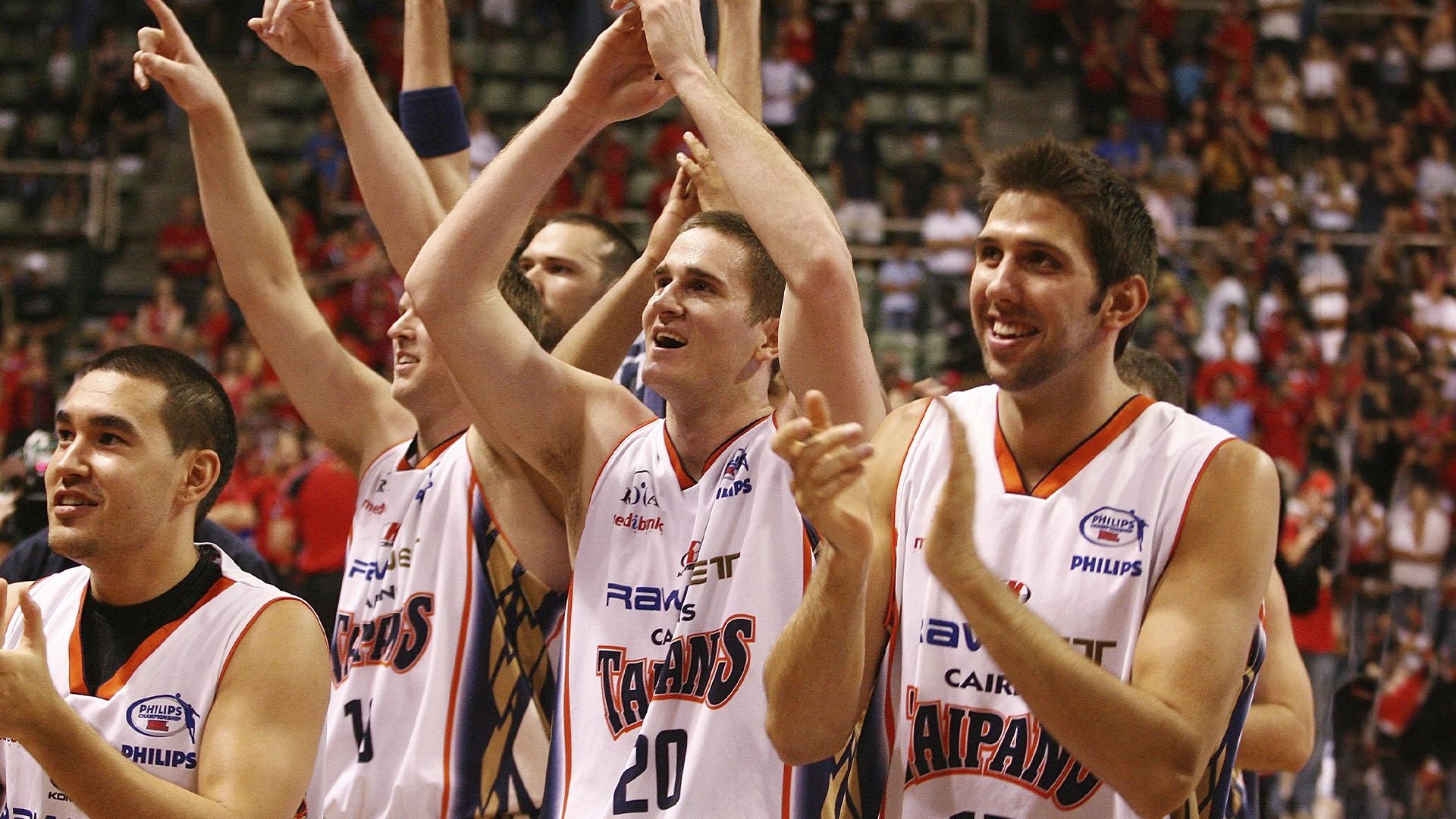
Humble beginnings
The early seasons were a tough introduction to elite competition, but they forged the Taipans’ identity. Relentless passion, a loud home floor and pivotal players willing to patiently build from the ground up.
Breakthrough moments followed, including a first finals win in 2004 and a mid-2000s rise that saw the Taipans push deep into the postseason, driven by leaders such as Martin Cattalini and Aaron Grabau.
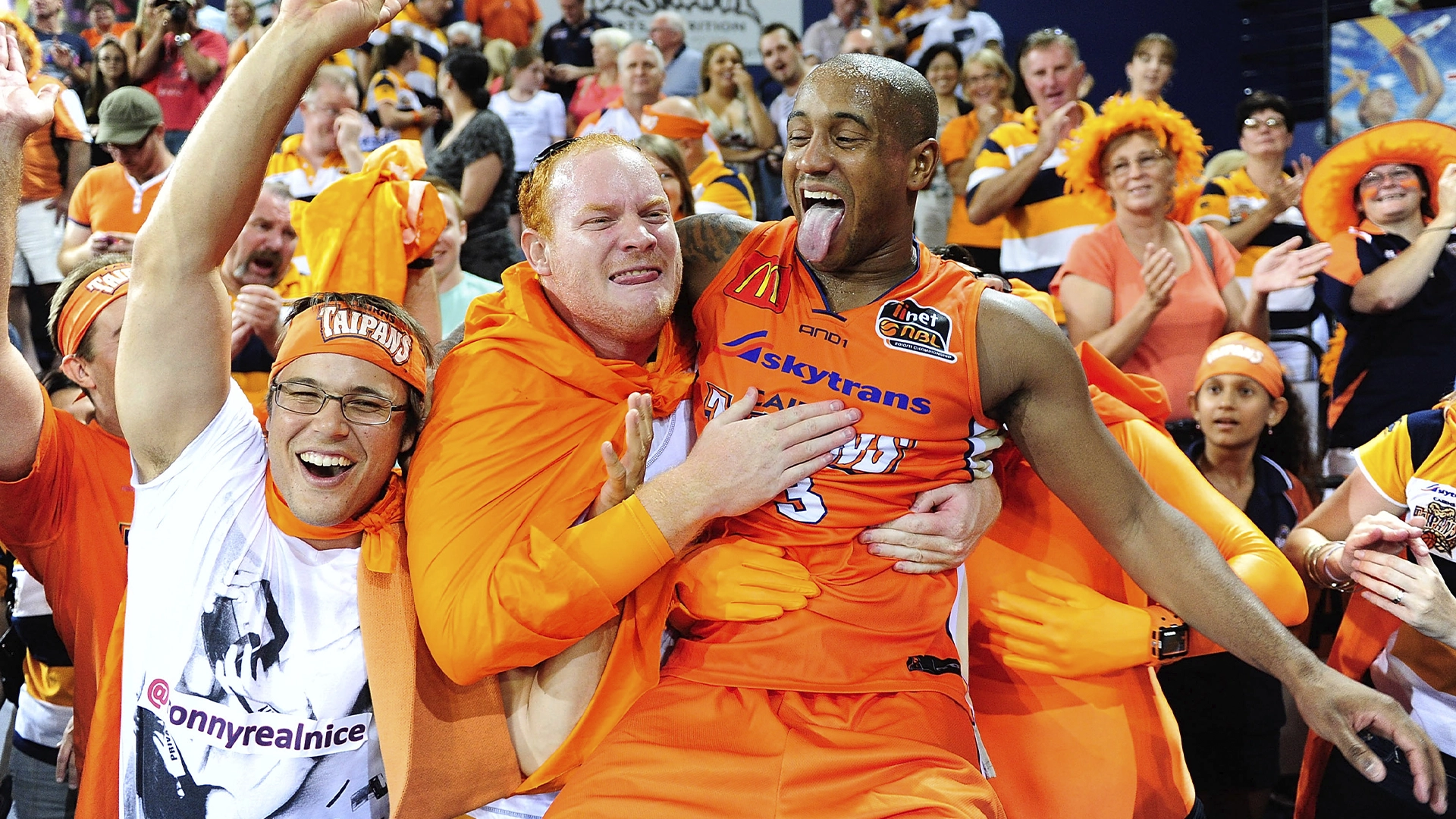
Building success
Across the club’s history, generations of players have carried the colours with pride. Grabau remains an enduring symbol of that loyalty, an inaugural Taipan and a club stalwart whose number 8 has been retired.
Alongside iconic names like Nathan Jawai, Anthony Stewart, Cameron Gliddon and Alex Loughton to name a few, the Taipans have twice reached the NBL Grand Final in 2011 and 2015, while also crowned minor premiers in 2015 behind decorated Head Coach Aaron Fearne.
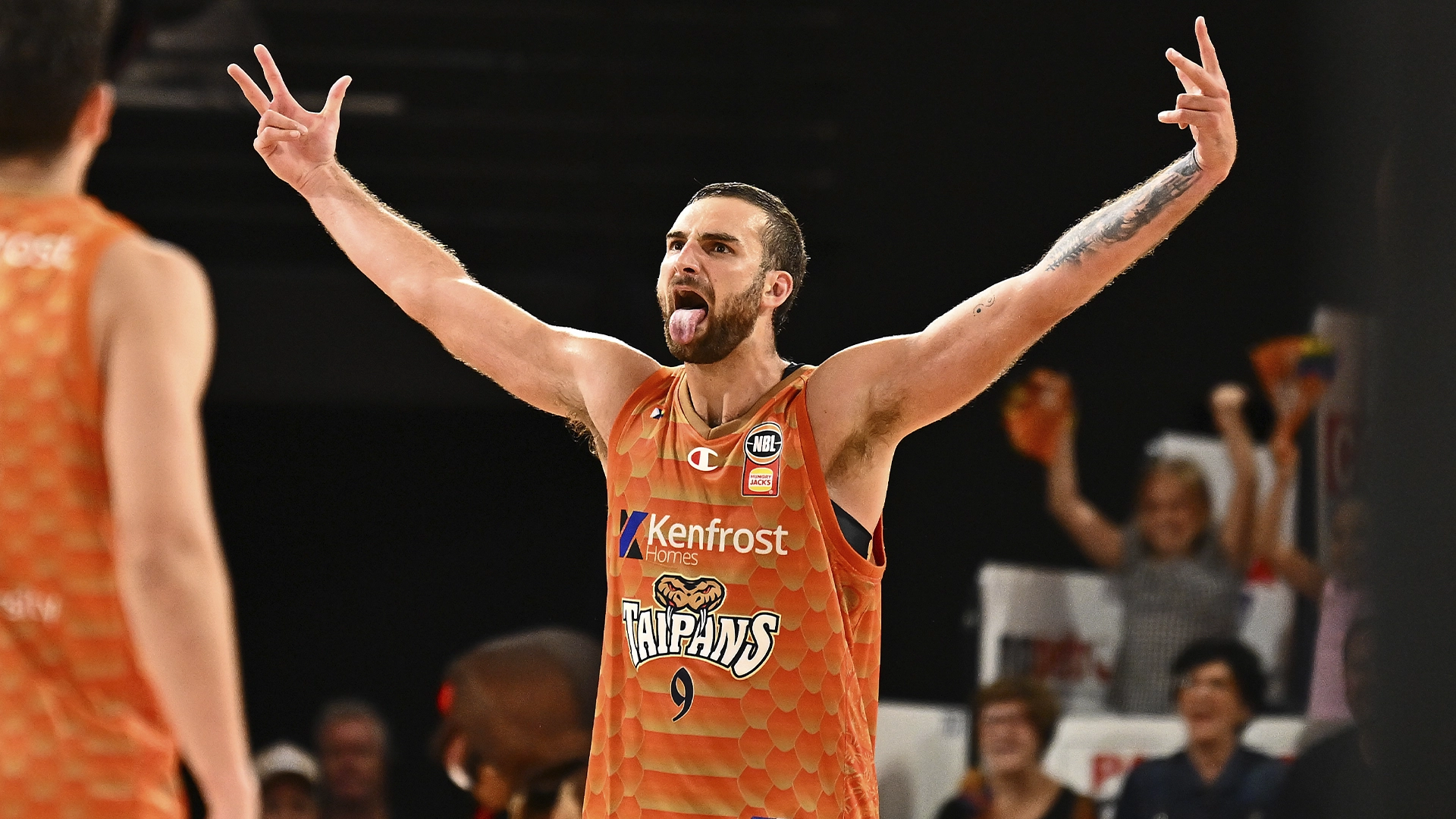
An established NBL name
Today, the Taipans continue to represent the region with purpose. A community-first club that develops talent, competes fearlessly and gives members and supporters a shared sense of belonging, every time the Orange Army roars.
Humble beginnings
Founded in 1999, the Cairns Taipans entered the National Basketball League as one of the competition’s most eccentric teams. Here was a new club from regional Far North Queensland, based far from the league’s traditional centres of power, with an opportunity to battle against better-resourced and better-established programs.
The Taipans were representing a basketball community and a sense of northern pride that wanted to prove it deserved to belong on the national stage.
From the beginning their home was the Cairns Convention Centre and the team was the embodiment of grit, connection and a special brand of basketball shaped by a region with a rich history on the hardwood.
Getting settled in the NBL
The first season under Rod Popp was tough on the scoreboard after dominating the QBL across the 1990s. It was a steep jump from the Cairns Marlins renowned success, with the Taipans losing their first seven games before finally breaking through with the first win in club history, a 99-86 home victory over the Sydney Kings on 13 November 1999. Later that summer came another landmark, the first away win, an 84-79 result against state rivals the Brisbane Bullets, on the way to a 2-26 inaugural campaign.
Yet even in that difficult beginning, the roots of the club were being laid. Aaron Grabau, a future club icon, was there from day one after coming through strong state league basketball in the north with the Marlins. Former players from that era would later describe the jump as a mental shock. One season you were winning regularly in the local competition, the next you were getting tested every night by hardened NBL veterans.
Grabau remembered those early months as a crash course in resilience. Rod Popp had capable players, including slick guard Terry Johnson, veteran Andre Moore and high-level athlete Rashenell Jones, but several former Taipans later felt the system that had worked in the ABA did not translate cleanly to the NBL. That, in many ways, was the first lesson of Cairns basketball. Building an elite club in the Far North was going to take more than passion. It would take adaptation, smarter recruiting and time.
Building the culture
By 2000-01, the Taipans had begun that climb. The record improved to 6-22 and ninth place, which still looked modest but was meaningful progress for a club coming off a two-win debut season. The most important development was Ben Knight’s breakout.
Knight more than doubled his output from the previous year to average 18.9 points and 10.1 rebounds, earning All-NBL Third Team honours and sharing the club MVP with Aaron Trahair. Anthony Stewart won the coaches award while Grabau was recognised as best defensive player.
Stewart’s arrival from the Perth Wildcats also mattered beyond the stat sheet. He brought championship experience, leadership and a professional edge that shaped the culture. Grabau later recalled shooting with Stewart every day after training, often grinding through hundreds of makes and learning from him what winning habits actually looked like at an NBL level.
That kind of detail says a lot about why the Taipans slowly became more credible. They were not just adding talent. They were absorbing a competitive culture.
A new leader arrives
The next major change came in 2001-02 when Guy Molloy took over as Head Coach. Molloy arrived hungry for his first NBL head coaching chance and inherited a club still trying to establish itself competitively and financially.
Former players remembered his first pre-season as punishing, the toughest of their careers, with a heavy emphasis on conditioning, standards and mental toughness. There were early signs of improvement, including a run to the final of the pre-season tournament, but the regular season was tougher.
Cairns finished 9-21 and 11th. The defining individual story was Jayson Wells, a dynamic scorer who averaged 21.8 points and 8.7 rebounds in 19 games after arriving as a replacement import and immediately becoming the team’s offensive centrepiece.
Wells won club MVP, Kane Oakley took the coaches award and Jamie Pearlman was named best defensive player. Oakley was also runner up in the 2002 NBL Rookie of the Year award.
Off the court, money worries and instability still hovered in the background, making Cairns a difficult place to recruit to and an even harder place to build with continuity. Even so, Molloy’s first year started to push the club towards a clearer identity. Tougher, fitter and less willing to accept easy losses.
Establishing the Taipans identity
That identity strengthened in 2002-03. Cairns improved again to 13-17 and eighth, the clearest sign yet that the Taipans were edging away from expansion-club fragility and towards genuine competitiveness.
Wells remained a major force, averaging 20.1 points and 9.2 rebounds across 30 games, while Knight continued to produce with 17 points, 8.1 rebounds and 2.6 assists a night. Anthony Stewart and Knight were named Club MVPs, Ben Arkell won the coaches award and Darnell Mee announced himself as an important new figure by taking out best defensive player.
This season mattered because it was no longer about whether Cairns could occasionally surprise someone. The Taipans were beginning to expect to compete. They won rival clashes in Brisbane and Townsville on consecutive nights early in the campaign, pinched a one-point road win in Adelaide and closed with a 128-109 demolition of the 36ers at home. Just as importantly, their rivalry with the Townsville Crocodiles was becoming part of the club’s emotional identity. Renowned as the Reptile Rumble, the rivalry started to feel like one of the great North Queensland sporting events and how powerful the Cairns home atmosphere could be.
The first post-season action
Then came the breakthrough year, 2003-04. Cairns finished 16-17 and sixth, reaching the finals for the first time in club history.
The roster had real balance now. Marcus Timmons became the headline figure and won the club MVP, while Anthony Stewart, Aaron Grabau, Brad Davidson, Tony Rampton and others formed a hard-edged local core.
Melvin Thomas gave the team early energy and scoring and star big man Chris Burgess later added rare size, touch and versatility. Molloy had also assembled a side full of proven NBL contributors who understood how to play together.
One of the season’s telling moments came in January 2004 when Cairns beat the Melbourne Tigers 92-90, snapping a 14-game losing streak against them.
With the game tied in the dying seconds, a foul on Andrew Gaze sent Brad Davidson to the line and the Taipans finally broke through. Those sorts of wins changed the psychology of the club.
Cairns was no longer just hanging around the powerhouse teams. It was beating them.
Making our voice heard
What followed in March 2004 remains one of the defining nights in Taipans history.
In the club’s first ever finals appearance, Cairns beat the Perth Wildcats 103-96 at the Cairns Convention Centre, with Anthony Stewart pouring in 30 points, Marcus Timmons adding 22, Grabau 16 and Burgess 15 with nine rebounds.
It was more than a result. It was validation. Stewart and Timmons, both former Wildcats, made crucial plays late, the building was deafening and former players later said the noise was so intense they had to communicate by hand signals because they could not hear each other.
Sold-out crowds had been building towards that moment for weeks. In many ways, that night created the mythology of Taipans basketball. A regional team, playing in one of the league’s most remote venues, had just knocked out a powerhouse in front of a crowd that helped drag the team over the line.
Cairns lost to West Sydney in the next round, but by then the bigger point had already been made. The Taipans belonged.
Rebuilding for the future
The follow-up campaign in 2004-05 did not bring another finals berth, but it still produced important individual seasons in club history.
Tim Behrendorff took the coaches award and Tony Rampton was named best defensive player.
Cairns slipped to 11-21 and 10th, yet Chris Burgess was magnificent. He won club MVP, earned All-NBL First Team honours and finished as the league’s leading rebounder at 13.6 a game while averaging 20.4 points.
Burgess was a fascinating figure in the evolution of the club because he felt ahead of his time. At 6ft 10in, he could score inside, step out and shoot, run the floor and cause matchup problems that big men of that era were not always built to solve.
Former teammates would later describe him as one of the best imports ever to wear the orange. Molloy’s teams often used triangle principles in the halfcourt and Burgess fit that structure beautifully.
So while the season was a step back in ladder terms, it was not empty. It showed Cairns could still attract and maximise elite-level talent even when the collective result dipped.
Defining the focus
Another turning point arrived in 2005-06 when championship coach Alan Black replaced Molloy with a clear contrast in style. Where Molloy was intense, demanding and relentless, Black was calmer and more instinctive, a former player who knew when a group had trained hard enough and when it needed a different touch.
The roster also clicked. Superstar Martin Cattalini arrived and reunited with elite defender Darnell Mee, while Burgess, Stewart, Oakley and Grabau gave Cairns a mix of scoring, defence, experience and cultural backbone.
The Taipans responded with the best regular season in club history to that point, finishing 18-14 and fifth. There were statement wins everywhere. Cairns beat Melbourne 110-104 to end the Tigers’ nine-game winning streak, then hammered minor premiers Sydney 107-84 at home to secure a finals berth and a home final.
This was an organised, tough and dangerous side representing Cairns.
An overtime thriller
The finals run of 2006 was one of the remarkable chapters of the club’s first decade. Cairns beat the Hunter Pirates 88-80 in the elimination final, then went to Adelaide and won one of the most famous road games in history.
With the scores locked at 103-103 late in overtime, clutch shooter Anthony Stewart nailed the decisive three to sink the 36ers 106-103 and send the Taipans into the semi-finals against the reigning champion Sydney Kings.
The season ended there, with Sydney taking the series 2-0, including a tight 84-82 win in Cairns, but the bigger picture was unmistakable.
The Taipans had become a serious finals program. The awards underscored it. Cattalini won Club MVP, Kane Oakley took the Coaches Award, Mee was both Club Best Defensive Player and the NBL’s Best Defensive Player and Mee, Burgess and Cattalini all earned All-NBL Third Team honours.
The Far North side had built itself into the kind of side contenders hated meeting in February.
The 51-point night
Rather than falling away, the Taipans backed it up in 2006-07.
Cattalini, refreshed after a proper off-season and free of Australian Boomers duties, produced one of the great individual seasons by an Australian in club history. He made All-NBL First Team, won club MVP and Bullets captain Sam Mackinnon was awarded the Andrew Gaze Trophy for NBL’s MVP after finishing narrowly ahead of Cattalini in the voting.
On 22 November 2006, he detonated for 51 points in a 122-119 overtime win over the Brisbane Bullets. It remains one of the iconic regular season performances in Taipans history. Cairns also beat Sydney 91-90 in October when Cattalini snatched the winning basket late, further proof that this group could match it with the league’s best.
Grabau won the Coaches Award, Mee repeated as Best Defensive Player and the team finished 17-16 in sixth. Those honours captured the character of the side perfectly. Cattalini was the elite scorer and cool head, Mee the defensive menace and Grabau the cultural barometer, the inaugural Taipan who symbolised effort, physicality and the sort of one-percent plays Cairns supporters always loved.
An established name in the league
The 2007 finals added another layer to the club’s growing reputation. Cairns crushed the South Dragons 118-97 in the elimination final with Mee scoring 27 points, including 17 in the first quarter, before travelling west and knocking out Perth 82-78 in the quarter-final behind pivotal performances from Anthony Stewart and Martin Cattalini.
Only then did the run end against Melbourne. By this point, the Taipans were no longer a curiosity from the Far North. They were a club with an engrained style and identity. They were physical, disciplined and smart. They relied on veterans who understood pressure, defended with intent and turned the Cairns Convention Centre into a fortress and one of the hardest trips in the league.
Across this first era, Rod Popp had guided the painful birth of the club, Guy Molloy had dragged it into relevance and Alan Black had turned it into a consistent finals presence.
Along the way, players like Grabau, Stewart, Knight, Wells, Timmons, Burgess, Mee and Cattalini to name a few built the framework of what Taipans basketball would come to mean. Toughness. Effort. Community. Home-court edge and pride in the north.
By the end of 2006-07, the club had become a contender and part of the NBL’s fabric.
Strong foundations, stronger goals
By 2007, the Cairns Taipans had already fought through the uncertainty and growing pains that come with being an expansion club.
They had established themselves as a genuine NBL team, built a hard edge under Alan Black and produced meaningful signs that Cairns could become more than a regional outpost in a big city league.
The years that followed from 2007 to 2015 would deepen that identity. They would bring financial collapse and survival, grand final runs and heartbreak, strapped together with some of the most iconic figures in club history.
If the first era of the Taipans was about proving elite basketball could breathe in Far North Queensland, this chapter was about proving it could endure, then prosper.
The man from Bamaga
Nathan Jawai’s rise sat at the front of that story.
He was far more than an exciting young centre. He became one of the most profound sporting symbols the region has produced.
Jawai grew up in Bamaga at the northern tip of Cape York and his journey to Cairns basketball carried a significance that stretched far beyond the chalk concrete courts he started on.
He came from a remote community, walked to school barefoot as a child and later spoke about English being his second language. For a player thriving through adversity to fight his way into the NBL and then later on to the NBA gave his success a scale that statistics cannot explain.
A local for the Far North
In Cairns, in Far North Queensland and across Australia, he became proof that a kid from one of the country’s most remote locations could make it to the pinnacle of sport.
For Indigenous communities in particular, that made Jawai an inspirational figure. He was not just a local success story. He was a symbol of possibility and pride.
On the floor, Jawai gave the Taipans a new kind of force. His game was built around power and a punishing presence in the paint.
He used his size to carve out space, dominated around the rim and gave Cairns an interior weapon few teams could handle.
In 2007-08, the Taipans were no longer trying to convince the league they belonged, the question had shifted to whether they could sustain their competitiveness and regenerate after the departure of major figures from the earlier era.
Setting the standard
There was already a foundation in place. Anthony Stewart had helped create it across the early and mid 2000s and his influence still hung over the club even as new faces came through.
Stewart had been one of the defining figures of the Taipans’ first serious rise. He brought championship habits from Perth, gave Cairns composure and leadership and helped teach the club what professionalism looked like.
His big moments had already become part of Taipans folklore, including the 30-point performance in the first finals win in club history and the historic three-point dagger in Adelaide that helped send Cairns to its first semi-final.
By the late 2000s, Stewart’s significance was deeper than any one box score. He had helped set the standards from his arrival in 2000 until his departure in 2007. Standards players after him would inherit. That inheritance mattered in 2007-08.
Alan Black still had the Taipans playing with discipline and grit, and around a rookie Jawai were experienced figures such as Cattalini and Grabau who continued their impact in the Far North. While Stephen Black, the son of coach Alan, helped keep the team balanced.
A feared foe
Cairns was not the flashiest side in the league, but it had become one of the most difficult to play against.
The Taipans finished in the playoffs and although they were eliminated by New Zealand, the larger meaning of that season sat beyond the result. Jawai averaged 17.3 points and 9.4 rebounds, won Rookie of the Year, earned All-NBL Second Team honours and was named Club MVP.
The Taipans had produced a star from their own region whose rise would soon echo far beyond Cairns, when he was drafted pick 41 in the 2008 NBA draft to the Indiana Pacers (later traded to the Toronto Raptors).
The dark days
Then came 2008-09 and with it one of the darkest chapters in the club’s history.
The team still had tremendous talent and there were moments when it looked capable of competing strongly, but the season was swallowed by financial crisis.
In December 2008, the Taipans went into voluntary administration. Soon the club was in liquidation and elite basketball in Cairns was suddenly under threat. Players and staff were asked to accept severe cuts. Star imports Larry Abney and Dave Thomas were released.
After accepting a salary cut to remain as coach, Alan Black’s tenure later came to an end as club finances continued to spiral with then assistant coach, Mark Beecroft, taking over as Head Coach for the remainder of the season.
The campaign became less about ladder positions and more about the fight for survival.
Continuing the fight
What that season revealed, though, was something essential about the Taipans.
They were not held together by money or structural comfort. They were held together by the community. Cairns kept fighting through the chaos with the same stubbornness that had defined its basketball identity from the beginning.
The pain of that year showed how fragile the club could be. It also showed how deeply it mattered to the city.
Few individuals embodied that connection more than Aaron Fearne. Fearne had been there from the start. He was part of the inaugural Taipans playing group in 1999, then moved into coaching and spent years as an assistant as the club found its footing in the NBL.
He understood the organisation not as an outsider passing through, but as someone who had lived through its earliest struggles, its growth and then its most vulnerable period.
When he became Head Coach in 2009, the appointment felt bigger than a staffing decision. It felt like a club turning to one of its own.
Building the local pathways
Fearne’s significance in Taipans history is difficult to overstate.
He had fingerprints on the club from its inaugural season onward. He was central to the shaping of the Taipans’ DNA. He believed in discipline, structure and role clarity. He also believed in development from within.
Through his work in Cairns, he helped build pathways for local talent and had a major influence on junior players across the region. He understood what basketball could mean in Far North Queensland because he had spent years helping grow the game there.
With his previous playing experience, he also understood the possibilities that existed beyond Cairns, including the American college system and his presence helped make those pathways feel real to the next generation.
Fearne was not only coaching a team. He was guiding pathways and reconstructing the club’s culture in the aftermath of their darkest, most fragile period.
A club reborn
The 2009-10 season reflected that reality. Cairns entered it in the wreckage of the year before, trying to rebuild after financial collapse.
The Taipans were saved from liquidation in early 2009 through a combination of community fundraising, a new ownership model, salary sacrifice from club staff, players and coaches, and critical support from Basketball Australia and Cairns Regional Council.
What saved the club was the strength of the community around it. That gave the season a deeper meaning. The club had not merely survived through luck. It had been carried forward by the people who believed it was worth saving.
Furthermore, in honour of Grabau’s extraordinary career in orange, which would eventually span 14 seasons and 405 games (a club record for all-time games played). The courageous guard's number 8 jersey was retired and raised to the rafters by the club while he was still playing in 2010, before a more formal presentation in 2019.
On the court, the Taipans went 11-17 and missed the finals, but the season still served a purpose.
Fearne began restoring order.
He started rebuilding the Cairns Convention Centre as a home fortress and a difficult road trip for visiting teams and re-established a sense of grit around the group. Far from a glamorous year, but it laid the emotional and structural bridge for what would follow.
Grand Final action
What came next was one of the greatest recoveries in Australian basketball.
In 2010-11, just two years after the club had been on the brink, Cairns surged to third on the ladder and all the way to the NBL grand final.
The Taipans defeated Townsville in a fierce semi-final series, another chapter in the infamous ‘Reptile Rumble’ rivalry. Then pushed a powerhouse New Zealand Breakers side led by C.J. Bruton, sharpshooter Kirk Penney, star forward Gary Wilkinson and captain Mika Vukona to a deciding game three in the championship series before falling short.
For a small-market regional club that had recently been fighting for its life, merely getting to that stage was extraordinary.
A deadly opponent
That team had a clear identity. It was ferocious defensively and connected offensively.
Ayinde Ubaka gave Cairns control in the backcourt. Ron Dorsey provided scoring bursts and unforgettable finals shotmaking.
Under Fearne, the Taipans looked organised and unflinching.
Dorsey’s ice cold 22-point performance in the double-overtime grand final win over New Zealand in game two became one of the most memorable nights in club history, not just because of the drama, but because it symbolised how far the Taipans had come back.
They did not win the title, but the underdogs battled the best without backing down.
Young forward turned leader
Alex Loughton was one of the players who best represented that era.
He became a defining figure under Fearne because he embodied the qualities the Taipans prized most, selflessness, intelligence and professionalism.
He was the type of forward who made teams function. He could score when needed, rebound, pass and defend. More importantly, he gave Cairns stability. In a club that had known both emotional highs and franchise fragility, that steadiness mattered.
Loughton helped drive the 2010-11 grand final run and remained a major figure in the seasons that followed, eventually becoming one of the structural pillars of the 2015 minor premiership side.
Keeping competitive
The challenge after the 2011 grand final appearance was to stay competitive once key pieces left.
Ron Dorsey, Ayinde Ubaka and Daniel Dillon were all poached by the Melbourne Tigers, forcing Cairns into another period of recalibration.
In 2011-12, the Taipans remained competitive and finished 15-13, just missing the playoffs under the format of the time. Jamar Wilson became the new focal point and carried much of the offensive burden. The season did not have the same magic as the one before, but it showed that Fearne had built a system with enough integrity to keep the club in the fight even as rosters changed.
An Australian star
Then in 2012-13, another crucial figure emerged.
Western Australian Cam Gliddon arrived and quickly began to grow into one of the most important Taipans of the decade. He was not initially framed as a star, but he fit the club perfectly.
Gliddon could shoot, defend, move without the ball and compete within a structure. He played with control and a high IQ and understood how to impact on both sides of the floor. He averaged just over seven points as a rookie, ranked among the league leaders in steals and won Rookie of the Year.
More importantly, he became a pillar of the club’s future.
The details mattered
Gliddon’s rise became one of the clearest expressions of Taipans basketball in that period.
He was not built around spectacle. He was built around trust and detail. He could do the unspectacular things that lead and keep teams together and still make important shots when needed.
Over time, he would become a three-time club MVP and captain of one of the best teams in club history. He represented the kind of player Cairns loved to develop and the kind of basketball identity Fearne most valued.
Locked in on the future
The 2013-14 season was a bridge year. Cairns again missed the playoffs, but the shape of the next great team was becoming clearer. Gliddon won club MVP despite dealing with a back injury. Loughton remained a steadying force.
Fearne kept insisting on structure, defence and role acceptance. The Taipans were not yet a finished contender, but they were building for a breakout year.
Returning to the heights
That peak arrived in 2014-15, a season that stands as one of the crowning achievements in Taipans history.
Cairns produced the best regular season the club had ever seen to that point, finishing 21-7 and claiming its first minor premiership. It was the fullest expression of the Fearne era, a team built on sacrifice and a brigade of tenacious defenders.
2009 NBL champion Matt Burston brought maturity to the side, while Cameron ‘Trigger’ Tragardh provided firepower off the bench.
The pieces fit. The culture held.
A superstar arrives
And then there was Scottie Wilbekin.
A 21-year old Wilbekin arrived from Florida and immediately changed the team’s ceiling. He gave Cairns a level of control and creation that separated good teams from elite ones. He could find a basket when the structure bogged down, organise the offence, defend with real purpose and carry himself with the poise of a far more experienced professional.
He won club MVP, best defensive player and All-NBL First Team honours and was central to the Taipans’ 6-0 start.
In the final round game that secured the minor premiership, he scored 25 points against New Zealand with 18 coming in the second half.
The young superstar gave Cairns not just production, but command.
Future NBA talent dons orange
Fan favourite Torrey Craig was just as important in his own way.
The 24-year-old brought athleticism, rebounding and defensive energy from the wing and gave the Taipans a dynamic edge without ever needing the team built around him. Craig could slash to the basket, defend multiple spots and swing momentum through sheer explosiveness.
On a team that thrived on fit as much as talent, he became one of the crucial pieces impacting off the bench.
A heartbreaking Grand Final
The Taipans swept Perth in the semi-finals to reach the second grand final series in club history, once again facing a powerhouse New Zealand Breakers with a championship on the line.
Following a valiant fight, the Taipans fell heartbreakingly short and were ultimately outclassed by a superior Breakers outfit.
Fearne was named Coach of the Year, Tragardh won Sixth Man of the Year and Wilbekin made the All-NBL First Team. Cairns had gone from liquidation and uncertainty to a 21-win season and a minor premiership in the space of six years.
Through the fire, and into the light
That is what makes the 2007 to 2015 chapter so important in the history of the Cairns Taipans.
It was not only about wins or grand final appearances. It was about what the club came to represent.
Nathan Jawai’s rise gave the region an icon and gave Indigenous kids across Australia a story of possibility.
Aaron Fearne became the great connective figure of the organisation, carrying its identity from the inaugural season into its most successful modern years while helping build real pathways for local talent.
Alex Loughton gave the club balance and professionalism.
Cam Gliddon became the embodiment of its discipline and selflessness.
Scottie Wilbekin and Torrey Craig elevated a great team into a genuine championship threat.
And through it all, the old standards set by figures such as Aaron Grabau, Anthony Stewart and Martin Cattalini still echoed in the background.
By the end of 2015, the Taipans had become one of the NBL’s great overachieving clubs. They had survived collapse, rebuilt through community belief and proven that an underdog team from Far North Queensland could not only compete with the league’s biggest superpowers, but make them earn every possession at the death of the season.
Evolving the identity
Picking up from the 2015 minor premiership and grand final run, the Fearne era had already given Cairns its clearest modern identity.
Disciplined, connected, a challenge to play against and capable of punching above its weight against the league’s heavyweights. But after the 2011 and 2015 breakthroughs, the roster shifted, momentum changed and the club was forced to search for a new format.
A hero's return
One powerful moment arrived in June 2016 when hometown hero Nathan Jawai returned to the Taipans, a homecoming that meant far more than basketball. Jawai was already one of the great symbols of the club whose rise to the NBA and Europe carried enormous significance across Far North Queensland and beyond.
His return brought pride, presence and a sense of continuity to a club moving into a more uncertain chapter.
The final years under Aaron Fearne could not quite recapture the near-championship peaks of earlier.
Still, Fearne remained one of the most important figures in club history, an inaugural player, long-time assistant and then Head Coach who had helped lead the Taipans from near-extinction to multiple grand final appearances.
But in March 2018, Cairns chose not to renew his contract, ending his 19-season association with the club. It was the last close of a foundational era.
An NBL champion leads Cairns back to the post-season
The next reset came with 1996 NBL champion Mike Kelly, who took over in 2018.
His first season was difficult, but in year two the Taipans rose from the bottom of the ladder to the semi-finals, driven by one of the most exhilarating import duos the club has ever seen in Scott Machado and Cam Oliver.
Machado was all rhythm and control, a floor general who seemed to play with the game on a string with a damaging jumpshot. He changed speeds, bent defences and delivered passes that arrived a split second before the defence realised the danger.
Then there was Oliver, known as Space Cam, a high-flying force of nature who brought electricity to the floor. He ran the court like a wing with the presence of a big man, exploded above the rim and turned broken plays into highlights.
Together, they gave Cairns something unforgettable. Machado was the brain, Oliver the burst. One conducted the chaos, the other finished it in the sky.
The crucial supporting pieces
Around them, players like DJ Newbill, Jarrod Kenny, Majok Deng and Jawai gave the team balance and bite. That 2019-20 group came within one win of the championship series before falling to Perth in a deciding semi-final, but for a stretch they played with a speed, flair and swagger that made them one of the most entertaining Taipans teams of the modern era.
Machado was named to All-NBL First Team and awarded NBL Fans MVP, while Oliver and Newbill were named to All-NBL Second Team.
Newbill, a decisive figure in his second season with Cairns, would become the second Taipan in history to be awarded the league’s best defensive player along with fellow perimeter pest Darnell Mee in 2006.
Kelly’s work was recognised when he was named the 2020 NBL Coach of the Year, proof that Cairns could still rattle the contenders.
Sharpening the focus
A difficult 2020-21 campaign led to the departure of Kelly in 2021.
The Taipans turned to Adam Forde and in many ways the club’s modern identity sharpened again under him. Forde arrived with deep NBL pedigree, including four championships as an assistant at Perth and a reputation for detailed scouting, strong player relationships and discovering talent others missed.
That has become one of his great signatures in Cairns. Under Forde, the Taipans strengthened their standing as a development club and a destination for players with upside, the place where doubted, overlooked or still unpolished talent could be shaped into genuine NBL impact.
His eye for fit, hunger and improvement has been central to Cairns’ reputation for unearthing diamonds in the rough, whether it be elite defender Bul Kuol, towering forward Keanu Pinder, Kiwi big men Sam Waardenburg and Sam Mennenga along with playmaker Taran Armstrong to name a few.
Surging back to the Finals
That vision came roaring to life in 2022-23, as Cairns raced back to the post-season.
With the NBL introducing a top-six play-in format, the Taipans did not just squeeze in, they surged into relevance.
Forde’s second Cairns team finished third, beat Perth 91-78 in the play-in and then pushed the eventual champion Sydney Kings to a deciding third game in the semi-finals.
One Band, One Sound
This was the Tahjere McCall era at its most vivid. The Philadelphia native McCall brought edge, defensive venom and emotional steel, helping give the side its pulse. Around him, Keanu Pinder blossomed into one of the league’s most dangerous forwards, DJ Hogg gave Cairns scoring punch, Shannon Scott brought composure, while Sam Waardenburg, Bul Kuol, Lat Mayen and Ben Ayre all played pivotal roles in a deep, hungry group.
McCall’s toughness came to define that run too, returning from a partially dislocated shoulder as Cairns kept swinging.
The Taipans ultimately fell to Sydney, but they had once again reminded the league what Cairns basketball looks like at its best. Brave, connected and unafraid of the moment.
Hogg and Pinder were awarded All-NBL Second Team for their terrific performances, with Pinder also attaining the NBL Most Improved for the second year straight. Waardenburg was awarded the NBL Next Generation Award, a year after Kuol was awarded the same accolade before its name change with NBL Rookie of the Year. Demonstrating promising talent could blossom in the Far North.
Forde was named Coach of the Year and later recommitted to the club for its next chapter.
Building the talent factory
The Taipans would go on to miss out on the post-season for the next three seasons, however not without remarkable individual moments along the way.
Swedish sensation Bobi Klintman, recruited as a Next Star for the 2023-24 campaign would go on to be selected at pick 37 by the Detroit Pistons in the 2024 NBA draft.
Tasmanian playmaker Taran Armstrong also made his way to the NBA with the Golden State Warriors following two campaigns in Orange.
Strengthening local roots
Meanwhile in 2024, Cairns born and bred Kody Stattmann would mark his Far North homecoming following a tenure at the University of Virginia before brief stints with the Brisbane Bullets and South East Melbourne Phoenix.
In the same season, New Zealand international Sam Waardenburg rose to become one of the premier big men of the NBL. The dynamic centre swept the club awards including Club MVP, Members’ Choice MVP and Defensive Player of the Year.
Another outstanding individual year arrived the following season with the blockbuster signing of Australian Boomer and former Houston Rocket Jack McVeigh for the 2025-26 campaign. One of the biggest recruits in Taipans history, McVeigh would stamp his return to the NBL with a monster season including a remarkable 47-point match-winning performance in front of the Orange Army. Later selected to the All-NBL Second Team and receiving Club MVP and Members’ Choice MVP.
As a proud regional club from Far North Queensland, the Taipans continue to write inspiring chapters of endurance while rising against the odds.
Their 27-year history has been both turbulent yet passionately euphoric.
Today, the Taipans continue to represent the region with purpose.
A community-first club that develops talent, competes fearlessly and gives members and supporters a shared sense of belonging, every time the Orange Army roars.
Get in touch
Have a question, comment, or just want to say hi? Fill out the form and we’ll get back to you as soon as we can.
Thank you
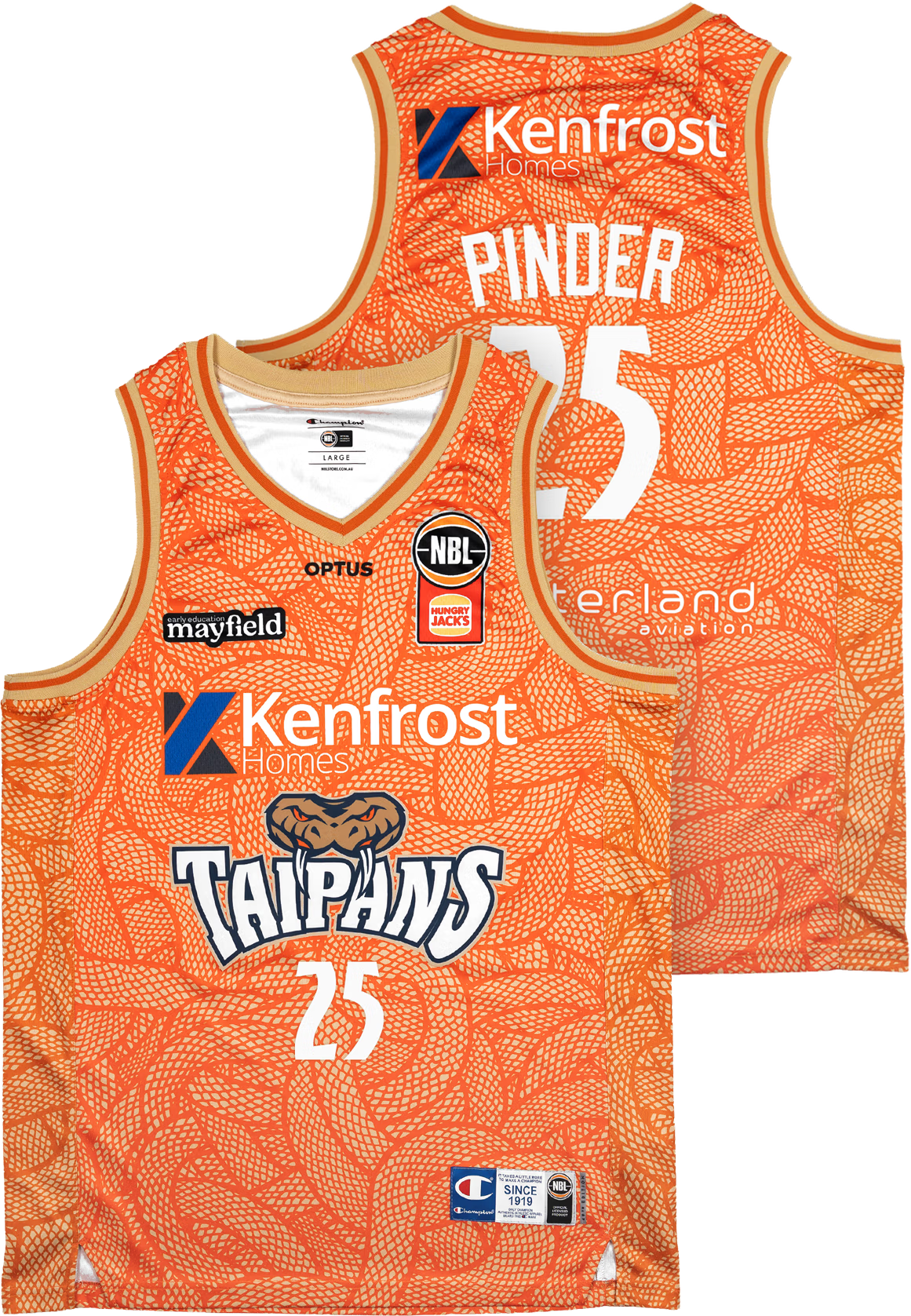
Support your team with the latest gear
Grab your latest team releases before they're gone.
Follow for behind the scenes content


Subscribe to Snake Bites
Get the latest updates from your Taipans, direct to your inbox.

2026/27 Tickets
Now Available
NBL Properties



Subscribe to our Newsletter
Thank you


The National Basketball League acknowledges the Traditional Custodians of the lands on which we work, live & play. We pay our respects to their Elders past, present & emerging as well as all Aboriginal and Torres Strait Island Community. © year National Basketball League | Terms & Conditions | Privacy Policy